
Monday, February 20, 2012


Saturday, February 4, 2012
Beautiful advice from a mother to her daughter on the day of her nikah

Beautiful advice from a mother to her daughter on the day of her Nikaah
Jamharah Khutah al-‘Arab, 1/145
‘Abd al-Malik (RA) said: “When ‘Awf ibn Muhallim al-Shaybani, one of the most highly respected leaders of the Arab nobility during the jahiliyyah, married his daughter Umm Iyas to al-Harith ibn ‘Amr al-Kindi, she was made ready to be taken to the groom, then her mother, Umamah came into her, to advise her and said:
‘O my daughter, if it were deemed unnecessary to give you this advice because of good manners and noble descent, then it would have been unnecessary for you, because you posses these qualities, but it will serve as a reminder to those who are forgetful, and will help those who are wise.
‘O my daughter, if a woman were able to do without a husband by virtue of her father’s wealth and her need for her father, then you of all people would be most able to do without a husband, but women were created for men just as men were created for them.
‘O my daughter, you are about to leave the home in which you grew up, where you first learned to walk, to go to a place you do not know, to a companion to whom you are unfamiliar. By marrying you, he has become a master over you, so be like a servant to him, and he will become like a servant to you.
‘Take from me ten qualities, which will be a provision and a reminder for you.
‘The first and second of them are: be content in his company, and listen to and obey him, for contentment brings peace of mind, and listening to and obeying one’s husband pleases Allah.
‘The third and fourth of them are: make sure that you smell good and look good; he should not see anything ugly in you, and he should not smell anything but a pleasant smell from you. Kohl is the best kind of beautification to be found, and water is better than the rarest perfume.
‘The fifth and sixth of them are: prepare his food on time, and keep quiet when he is asleep, for raging hunger is like a burning flame, and disturbing his sleep will make him angry.
‘The seventh and eight of them are: take care of his servants (or employees) and children, and take care of his wealth, for taking care of his wealth shows that you appreciate him, and taking care of his children and servants shows good management.
‘The ninth and tenth of them are: never disclose any of his secrets, and never disobey any of his orders, for if you disclose any of his secrets you will never feel safe from his possible betrayal, and if you disobey him, his heart will be filled with hatred towards you.
‘Be careful, O my daughter, of showing joy in front of him when he is upset, and do not show sorrow in front of him when he is happy, because the former shows a lack of judgment whilst the latter will make him unhappy.
‘Show him as much honour and respect as you can, and agree with him as much as you can, so that he will enjoy your companionship and conversation.
‘Know, O my daughter, that you will not achieve what you would like to until you put his pleasure before your own, and his wishes before yours, in whatever you like and dislike. And may Allah choose what is best for you and protect you.”
Friday, January 27, 2012

Friday, November 11, 2011
About depression and sadness...
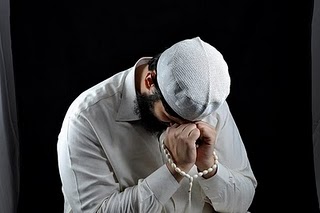
While sadness is the result of trauma (the lost of someone for example, or in case of a disappointment), patients who are suffering from depression often feel a deep sadness without knowing the trigger of it. Sadness or grief is something which fades, as time heals all wounds. Depression is often enduring through years, cyclic returning, or, in case of manic depression, alternate between a "high" phase and the "deep" phase, whereby maxing out both extremes.
From islamic point of view there is no real difference between sadness, grief and depression. Regardless which hardship are we facing: islam teaches us to seek refuge in Allah:

121. Allahumma 'innee 'a'oothu bika minal-hammi walhazani, wal'ajzi walkasali, walbukhli waljubni, wa dhala'id dayni wa ghalabatir-rijaal.
Oh Allah, I seek refuge in you from grief and sadness, from weakness and from laziness, from miserliness and from cowardice, from being overcome by debt and overpowered by men (i.e. others).
Reference: Al-Bukhari 7/158. See also Al-Asqalani, Fathul-Bari 11/173
But is there any special du'a we can recite in case of sadness or when our soul is overwhelmed from grief and sorrow?
Narrated Abdullah ibn Mas’ood, that the Messenger of Allah [SAWS] said: There is no person who suffers any anxiety or grief, and he/she says:

Allahumma innee ‘abduka,
ibnu ‘abdika, ibnu amatika
Naasiyatee biyadika,
Maadhin fiyya hukmuka, ‘adlun fiyya qadhaa’uka
As alooka bikulli ismin huwa laka sammayta bihi nafsaka
aw anzaltahu fee kitabika, aw ‘allamtahu ‘ahdan min khalqika
Awista tharta bihi fee ‘ilmil-ghaibi ‘indaka
An tajalal Qurana rab’eea qalbee, wa noora sadree
Wa jalaa’a huznee, wa zhahaaba hammee
except that Allah will take away his anxiety and grief, and replace his sorrow with joy. The companions asked: Ya Rasool Allah! Does it befit for us that we learn these words (i.e. this dua)?He replied: Absolutely. Whoever hears of it should learn it.
[Musnad Imam Ahmad]
The Prophet [SAWS] told us that if we find ourselves in a state of sorrow, anxiety, depression or sadness, we should make the afore-mentioned dua. The dua begins with glorifying and praising Allah, then we are instructed to make tawassul (seek a means to get closer) to Allah by asking through all of Allah’s perfect and majestic names…but what is the request after such prolonged praise?
“Make the Quran the life of my heart and the light of chest!”
It’s as if Rasool Allah [SAWS] is saying that if you’re depressed/sad/anxious/sorrowful, then the way to relieve this is to make your life revolve around the Quran! Because once you read the Quran, you will find:
peace and tranquility of the heart [13:28]
physical and spiritual healing (shifaa), and mercy [17:82]
guidance on how to live life, and good news [2:97]
How is it possible for someone who is attached to the Quran to ever be depressed? The heart of the true believer has such a deep trust in Allah, that instinctive understands: whatever hardship he is going through: Allah will reward him for his sabr, and even if facing great losts, he will say "Al hamdoulillah", than whatever comes from Allah, is best for us....
Grieve not, for Allah is with us. [Qur'an 9: 40]
And they say: Praise be to Allah Who hath put grief
away from us. Indeed our Lord is Forgiving, Bountiful. [Qur'an 35: 34]
AL HAMDOULILLAH
Friday, November 4, 2011
Live Chanel of Hajj 2011

For all those muslims who couldn't afford it this year to visit Mekkah at the time of Hajj.... please enjoy this link... live broadcast from KSA:
Sunday, October 9, 2011
Animals in Quoran and Hadeeth Vol. 1.

Did you know that over 200 verses of the Quoran are dealing with animals? 6 sourahs of the Holy Quoran are even named after animals. Namely:
- Al-baqarah (The Cow)
- Al-Anaam (The Cattle)
- Al-Nahl (The Bee)
- Al-Naml (The Ant)
- Al-Ankaboot (The spider)
- Al-Feel (The elephant)
Narated By Anas bin Malik: The Prophet said, "If any Muslim plants any plant and a human being or an animal eats of it, he will be rewarded as if he had given that much in charity." – [Bukhari Vol. 8, Book 73, #41]
Narated By Abu Huraira: Allah's Apostle said, "While a man was walking on a road. he became very thirsty. Then he came across a well, got down into it, drank (of its water) and then came out. Meanwhile he saw a dog panting and licking mud because of excessive thirst. The man said to himself "This dog is suffering from the same state of thirst as I did." So he went down the well (again) and filled his shoe (with water) and held it in his mouth and watered the dog. Allah thanked him for that deed and forgave him." The people asked, "O Allah's Apostle! Is there a reward for us in serving the animals?" He said, "(Yes) There is a reward for serving any animate (living being)." – [Bukhari Vol. 8, Book 73, #38] & [Muslim Book 26, Chapter 39, # 5577]
"The Prophet told his companions of a woman who would be sent to Hell for having locked up a cat; not feeding it, nor even releasing it so that it could feed herself." - Bukhari
Islam teaches us to be kind, respectful to animals. The Prophet was asked if acts of charity even to the animals were rewarded by God. He replied: "Yes, there is a reward for acts of charity to every beast alive." - Bukhari
Islam teaches us to be kind, respectful to animals. The Prophet was asked if acts of charity even to the animals were rewarded by God. He replied: "Yes, there is a reward for acts of charity to every beast alive." - Bukhari
Many hadiths clearly suggests that being brutal towards animals is a grave sin and Allah(swt) will punish him who treats the animals without kindness. It is obligatory for the owner of the animal to feed it. Just two examples of it:
Narated By Ibn ‘Umar: The Prophet cursed the one who did Muthla to an animal (i e., cut its limbs or some other part of its body while it is still alive). – [Bukhari Vol. 7, Book 67, #424]
Narated By Hisham bin Zaid: Anas and I went to Al-Hakam bin Aiyub. Anas saw some boys shooting at a tied hen. Anas said, "The Prophet has forbidden the shooting of tied or confined animals." – [Bukhari Vol. 7, Book 67, #421; #422]
Many rights have been given to animals and Muslims are required to obey these guidelines for transgression would make them sinful. While oppressing humans is wrong, Islam also teaches that oppression towards animals is wrong.
Islam gave animals rights at a time when animal rights were not recognized. Today the world is bringing awareness towards the rights of animals whereas Islam gave them their rights more than 1400 years ago. The most famous story about being kind to animals is seen when a cat came and slept on the robe of Prophet Muhammad(saw) while he was reading the Quran to the listeners. When it was time for the Prophet(saw) to get up, instead of disturbing the cat, he cut that piece of the robe and stood up. Today who would cut of a piece of their cloth so that the cat’s sleep would be undisturbed?
Wednesday, October 5, 2011
Proud to be muslim????

Favorite facebook sentence of many muslims online: I'm a muslim AND I'M PROUD. This is a sentence which usually drive me nuts.... I'm proud..... Usually coming from convert muslims, and from not native arab muslims, not knowing how wrong this sentence is. PROUD.... The reasons why this sentence is completly out of place are several. A) How could i be proud for something which is not my merit? It's rather a beautiful gift from Allah for which we should praise him and being thankful for it... We should rather say: im thankful to being a muslim. Our hearts should be filled with humbleness for this great gift, that Allah guided us... The right sentence would be: al hamdoulillah, i'm muslim.... but i hardly hear it nowadays from brothers and sisters.... this I'M PROUD took its place.... B) The second reason why i dislike this statement is: PRIDE as such is described in many quoranic verses and hadeeths as a disease of the heart, as something, which will prevent many muslims from entering the paradise. PRIDE is a sign of arrogance, and as such deletes all traces of goodness and piety. Allah has said in the Holy Quoran:
“I shall turn away from My revelations those who show pride in the world wrongfully.” (7.146)
Allah has said in another place in the Quran:
“And in this way Allah does put a seal on every arrogant disdainful heart.” (40.35)
2. The wrath and punishment of Allah fall on the jealous person. Allah has said:
“Certainly He does not love the proud ones.” (16:23)
...Verily, Allâh does not like such as are proud and boastful; Those who are miserly and enjoin miserliness on other men and hide what Allâh has bestowed upon them of His Bounties.... Qur'an 4:36-37
It is narrated that Hazrat Moosa asked exalted Allah: “Oh my Lord! Who is the most deserving of your wrath and displeasure?” Allah Ta’aala told him:
“ It is he whose heart is filled with pride and his tongue is filthy (i.e. Abusive), his eyes are devoid of shame, his hands are miserly and he is of bad conduct and character.
“ It is he whose heart is filled with pride and his tongue is filthy (i.e. Abusive), his eyes are devoid of shame, his hands are miserly and he is of bad conduct and character.
Also our beloved Prophet (saw) warned from the consequences of pride, as to find in several hadeeths. The most commonly known is this one:
In a Hadith of the Holy Prophet it is narrated that,
“Whosoever has in his heart, even a atom of pride he will not enter paradise.” (in other narrations discribed as: "weight of a mustard seed of pride" instead of atom of pride)
In observing the above Hadith, it is of utmost importance that we get rid of this spiritual malady, if we hold any illusion or hope of entering paradise.
Pride as a sin is incorrectly considered to be insignificant and minute in comparison to other major sins, by a vast majority of the people. It may be that compared to the major sins like murder and associating partner with Allah, it is slightly inferior. But that is only because of the magnitude of those particular sins that pride is considered a lesser sin.
The proud renders himself liable to Hell in the Hereafter. It occurs in a Hadith Qudsi: “Pride is My cloak and grandeur is my trousers. If anyone disputes with Me in any one of these (two) I shall admit him into the Hell-fire.”
In the other words, pride and grandeur are two exclusive attributes of Allah, which none is allowed to apply and ascribe towards himself.
It is imperative to refrain from such a dangerous calamity which leads to loss of knowledge of Allah, inability to understand the commands of Allah, His displeasure, disgrace in this world and the Hereafter and painful torment therein. No wise person can be neglectful in the matter of such a harmful and destructive calamity.
We should, therefore, try to save ourselves from this and seek refuge from Allah.
Hadith - al-Bukhari 9.541, Narrated Abu Huraira, r.a.
The Prophet  said, "Paradise and Hell (Fire) quarrelled in the presence of their Lord. Paradise said, 'O Lord! What is wrong with me that only the poor and humble people enter me?' Hell (Fire) said, 'I have been favored with the arrogant people.' So Allah said to Paradise, 'You are My Mercy,' and said to Hell, 'You are My Punishment which I inflict upon whom I wish, and I shall fill both of you. (The Prophet added, "As for Paradise, (it will be filled with good people) because Allah does not wrong any of His created things, and He creates for Hell (Fire) whomever He will, and they will be thrown into it, and it will say thrice, 'Is there any more,' till Allah (will put) His Foot over it and it will become full and its sides will come close to each other and it will say, 'Qat! Qat! Qat! (Enough! Enough! Enough!)."
said, "Paradise and Hell (Fire) quarrelled in the presence of their Lord. Paradise said, 'O Lord! What is wrong with me that only the poor and humble people enter me?' Hell (Fire) said, 'I have been favored with the arrogant people.' So Allah said to Paradise, 'You are My Mercy,' and said to Hell, 'You are My Punishment which I inflict upon whom I wish, and I shall fill both of you. (The Prophet added, "As for Paradise, (it will be filled with good people) because Allah does not wrong any of His created things, and He creates for Hell (Fire) whomever He will, and they will be thrown into it, and it will say thrice, 'Is there any more,' till Allah (will put) His Foot over it and it will become full and its sides will come close to each other and it will say, 'Qat! Qat! Qat! (Enough! Enough! Enough!)."In some cases when i was discussing this issue with convert sisters from UK and USA, they usually defend this statement with: in this sense is pride is not equal with arrogance. But the hadeeth clearly states about pride and not using the word arrogance, and i still can't understand why not saying "al hamdoulillah"... as it is Allah's special gift, and only Allah alone decides whom he wants to guide on the right path... or as they are explaining their point of view: one shouldn't hide and feel ashamed for being a muslim. I agree we shouldn't. I also didn't say denie it to being a muslim. But rather say: al hamdoulillah i'm a muslim. Or, if you would want to make it understandable your statement for non-muslims, say: i'm thankfull for being a muslim, i'm confident to being a muslim, but i'm a muslim and PROUD????
C) the third reason why i completly dislike this sentence is: it is often used by brothers and sisters who are hardly acting as muslims should, brothers, who are shaving their beard off out of fear they wouldn't get an appropriate job, sisters, who are taking their hijab off for the same reason. Where is "their pride to being a muslim" than?
I think its much more appropriate to say: AL HAMDOULILLAH IM A MUSLIM, i obey Allah and his Messenger (saw), trying my best to fullfill my obligations as muslim, and im saying every morning after waking up a humble al hamdoulillah w shoukr that i got this great gift from Allah to being guided to the right path.
And Allah knows best.
Subscribe to:
Posts (Atom)